
Inheritance Tax Changes Bring Partial Relief for Scotland’s Farming and Crofting Communities
Garve and District Community Council
Added at 14:05 on 23 December 2025
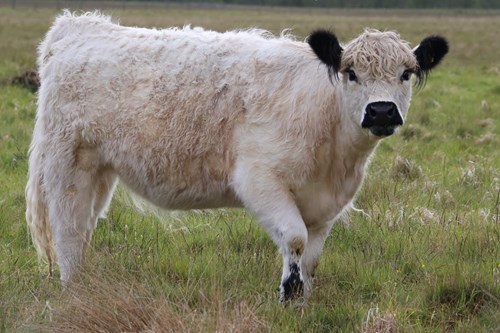
Today's announcment by the UK Government to inheritance tax rules affecting farms and rural businesses have brought some relief to agricultural communities in Scotland. However, the detail of what is covered, and what is not, remains critical for families currently planning succession or dealing with estates. Questions Arising
The revised policy follows widespread concern that earlier proposals risked breaking up family farms and crofts, particularly in areas such as the Highlands where land values are high but incomes are often modest.
What Has Changed Under the New Inheritance Tax Rules - As Far As We Are Aware ... from publicly available info ...
From April, the threshold at which inherited agricultural and business assets become liable for inheritance tax will be £2.5 million per individual.
Where assets qualify, married couples and civil partners can combine allowances, meaning up to £5 million of qualifying agricultural and business property can be passed on without inheritance tax being charged.
Above that level, qualifying assets will continue to benefit from partial relief, with inheritance tax effectively charged at 20 per cent rather than the standard 40 per cent.
The UK Government has said this change reflects feedback from the farming sector while maintaining that the most valuable estates should still make a contribution.
What Assets Are Actually Covered
A key issue for Scottish farmers and crofters is that the threshold does not apply automatically to everything on a farm. Relief depends on the type of asset and how it is used.
Agricultural Property Relief
Agricultural Property Relief applies to the agricultural value of land and certain buildings. This can include:
- Land and pasture used for agricultural production
- Farm buildings used as part of the working holding
- Farmhouses and cottages where they are genuinely occupied for the purposes of the farm
However, Agricultural Property Relief does not cover machinery, equipment, livestock or harvested crops. These assets are excluded even though they may be essential to the day-to-day running of the farm or croft.
Business Property Relief
Some assets not covered by Agricultural Property Relief may qualify instead under Business Property Relief, provided they are part of a genuine trading business.
This can include:
- Farm machinery and plant used wholly or mainly for the business
- Business interests and trading assets linked to the farm operation
Whether Business Property Relief applies depends on how the business is structured and operated. This distinction is particularly important for crofters and mixed farming businesses common in the Highlands.
Why This Matters in Scotland
Scotland’s farming and crofting systems differ significantly from much of the UK. Many holdings are land-rich but cash-poor, and succession often involves passing land and buildings between generations rather than selling assets.
Crofters have long warned that inheritance tax rules designed around large estates elsewhere do not reflect Scotland’s distinct land tenure systems. Concerns were raised that families could be forced to sell land, machinery or housing to meet tax liabilities, undermining already fragile rural communities.
While the increased threshold will reduce the number of Scottish estates affected in the short term, families close to the limit may still face complex decisions.
Scottish Government Position
The Scottish Government has consistently raised concerns about the impact of inheritance tax changes on Scotland’s rural economy.
The Minister for Agriculture and Connectivity, Jim Fairlie MSP, has told the Scottish Parliament that the proposals caused significant stress for farming families and that Scottish ministers had pressed the UK Government to reconsider. He has called for full impact assessments to reflect Scotland’s agricultural structures.
First Minister John Swinney MSP has also criticised the lack of consultation with devolved administrations, warning that the uncertainty created by the original plans was placing unacceptable pressure on farmers and crofters.
While inheritance tax remains a reserved matter controlled at Westminster, the Scottish Government has argued that rural land and succession policy should better reflect Scotland’s circumstances and has raised the issue of further devolution of tax powers.
Reaction from Scotland’s Rural Sector
Scottish farming and land organisations have welcomed the increase in the threshold but caution that it does not resolve all concerns.
NFU Scotland has said that while immediate pressure has eased, long-term clarity is essential to support succession planning and encourage younger generations to remain in agriculture.
Crofting organisations have stressed that keeping land and housing within families and communities is vital to sustaining population and economic activity in the Highlands and Islands.
What This Means for Families
For farming and crofting families, the changes offer some breathing space but also underline the importance of understanding the detail.
Families should be aware that:
- The £2.5 million threshold applies only to qualifying agricultural and business assets
- Land and core farm buildings may qualify for Agricultural Property Relief
- Machinery and equipment are not covered by Agricultural Property Relief but may qualify for Business Property Relief
- Estates near or above the threshold should seek specialist advice, particularly where land values are high but income is limited
Looking Ahead
While the UK Government’s change represents a partial climbdown, the debate over inheritance tax and rural land is far from settled in Scotland. The Scottish Government’s continued intervention highlights the need for policies that recognise the realities of farming and crofting communities, rather than treating land purely as a financial asset.
For rural areas such as Garve and District, where family farming remains central to the local economy and community life, the outcome of this debate will have lasting consequences.
Garve and District Community Council will continue to monitor developments and share relevant updates affecting local residents and rural businesses.
This press release from the Department for Environment, Food & Rural Affairs and HM Treasury explains the change in detail, including that:
The Agricultural and Business Property Relief threshold will increase from ***£1 million to £2.5 million from April 2026.
Spouses and civil partners can now pass on up to £5 million in qualifying assets before paying inheritance tax.
The change is being introduced via the Finance Bill and reflects government response to feedback from farming communities
***GDCC notes the 1 million was not due to begin until April 2026 so effectively was never introduced and the 2.5 million will the the threshold from April 2026
https://bit.ly/InheritanceTaxThresholdRise
Nothing contained in this article is legal advice or legal guidance